Virtual Reality for Neurodiversity: A path to Inclusive learning
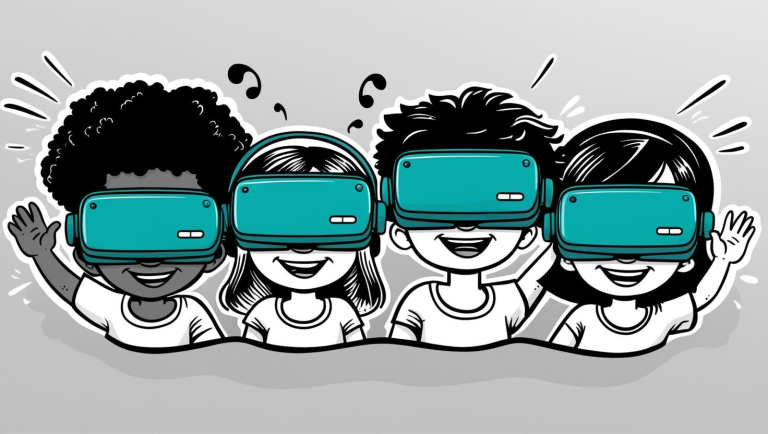
In recent years, technology has become an essential tool for learning and communication, particularly among neurodiverse students. Amidst the many technological innovations, Virtual Reality (VR) emerges as a promising and groundbreaking solution for the creation of inclusive educational environments for people with Autism Spectrum Disorder (ASD), Attention Deficit Hyperactivity Disorder (ADHD), and other neurodiverse conditions. VR offers customized and sensory-friendly experiences and holds the potential to address the unique needs and challenges faced by neurodiverse students in both educational and social contexts.
The Promise of VR for Neurodivergent Individuals
Neurodiversity refers to the concept that there is natural variation in how people’s brains function and comprehend the world around them. These conditions often come with sensory processing challenges that can make traditional learning environments overwhelming or inaccessible. VR, with its immersive capabilities, offers a solution that can be tailored to individual needs.
Research has shown that VR can provide safe spaces where students can engage with learning materials without the sensory overload that often accompanies traditional classroom settings. By adjusting the sensory environment in VR, educators can create comfortable, controlled spaces where neurodivergent learners can explore and practice new skills at their own pace, reducing distractions and discomfort. This flexibility makes VR a powerful tool for enhancing learning outcomes and fostering greater independence.
One of the key applications of VR for neurodiverse learners is its ability to address visual, auditory, and tactile sensitivities. Neurodiverse individuals often experience heightened sensitivity to sensory inputs, which can be overwhelming in everyday settings. VR can be customized to reduce the sensory input, through functions that control the levels of light, sound, and tactile feedback, creating environments that reflect their sensory experiences.
Additionally, VR can simulate social situations, or social stories, allowing neurodiverse students to practice social interactions in low-stress, controlled settings. This therapeutic approach not only aids in communication but also reduces anxiety, enabling individuals to engage more fully in educational activities and interact with their peers.
Exploring Cognitive Differences with VR
In addition to addressing sensory challenges, VR also allows for the exploration of cognitive differences that are common in neurodiverse learners. Savickaite’s (2023) research into visual processing styles emphasizes the importance of recognizing individual perceptual differences. VR offers a unique platform to study how individuals process and respond to visual information in different contexts. For instance, some may focus on local details, while others may perceive information more globally. By using VR, researchers can create tasks and environments that reveal these differences in a more controlled and observable way.
Such insights can lead to the development of personalized learning experiences that cater to these diverse cognitive styles, helping neurodiverse students learn in ways that align with their unique perceptual strengths.
Bridging Gaps in Communication with VR
VR offers a novel way to bridge communication gaps for neurodiverse students, particularly those with nonverbal traits. For example, many individuals with ASD struggle with verbal communication but can express themselves visually or through other non-verbal means. VR provides a dynamic, interactive medium where they can use visual representations or avatars to convey emotions and ideas without the need for traditional verbal interaction. Moreover, VR’s ability to simulate real-world experiences in a controlled setting helps neurodiverse individuals practice social interactions in a non-judgmental environment. This capability is especially crucial for those who may struggle with attention control in traditional learning environments. By engaging with VR, these learners can focus more effectively, as they are less likely to be distracted by external stimuli.
The Future of VR in Neurodiverse Education
As VR technology continues to evolve, its potential to revolutionize education for neurodiverse students grows exponentially. By incorporating immersive VR environments into educational practices, we can offer personalized learning experiences that meet the diverse needs of learners. These advancements not only enhance academic performance but also foster inclusion, enabling neurodiverse individuals to participate more fully in society and education.
The integration of VR into neurodiverse education is not just about accommodating differences—it’s about celebrating diversity and providing teachers, educators and neurodiverse individuals with the tools they need to thrive. Through careful design, iterative development, and collaboration, VR has the power to level the playing field and make education a more accessible and engaging experience for all.
References
Boyd, L. E., Day, K., Stewart, N., Abdo, K., Lamkin, K., & Linstead, E. (2018). Leveling the playing field: Supporting neurodiversity via virtual realities. Technology and Innovation, 20(1-2), 105-116. https://doi.org/10.21300/20.1-2.2018.105
Naruka, V. S., & Upadhyay, S. (2024). Virtual reality (VR) and neurodiversity: Therapeutic and educational applications. In L. E. Boyd, K. Day, N. Stewart, K. Abdo, K. Lamkin, & E. Linstead (Eds.), Transforming learning: The power of educational technology (pp. 151-159), BLUEROSE Publishers.
Savickaite, S. (2024). Using Virtual Reality to explore individual differences in perception due to neurodiversity [PhD, University of Glasgow]. https://doi.org/10.5525/gla.thesis.84098