The InclusiVRity Guidebook
The InclusiVRity Guidebook offers a comprehensive and practical roadmap for educators and youth workers committed to supporting neurodiverse learners through Virtual Reality (VR) technologies. Drawing from a diverse consortium of European educational experts, the guidebook foregrounds inclusion, accessibility, and safety in immersive learning environments, addressing educators’ real-world needs and priorities.
Inclusive Education in Context
The guidebook begins by emphasising the urgent need for inclusive educational practices across Europe, where neurodiversity is increasingly recognised as a source of strength rather than deficit. Inclusive education, rooted in international and European policy, calls for classrooms that value every student and adapt to individual profiles. An important argument is that educational settings must move beyond dual systems and traditional labels, fostering environments where all pupils can thrive regardless of cognitive or sensory differences.
Why Virtual Reality?
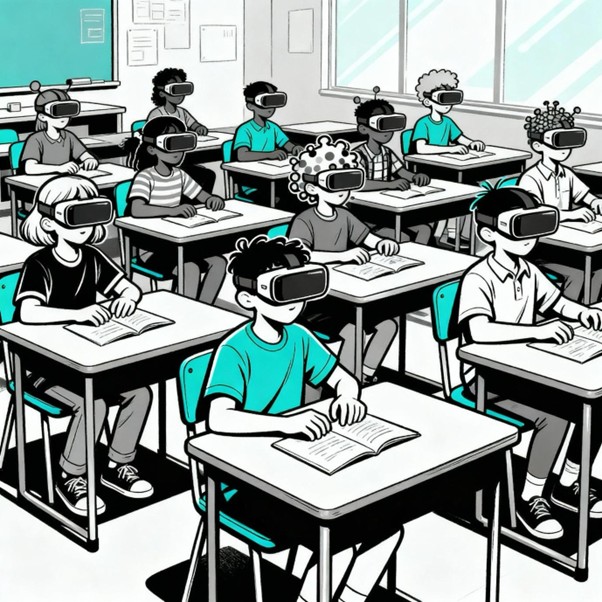
Virtual Reality is presented as a transformative technology with the capacity to break down barriers for neurodiverse students and enhance teaching practices. By offering multisensory and immersive experiences, VR allows students to learn by doing, rather than passively absorbing information. It extends the physical and temporal boundaries of conventional classrooms, accommodating a wide range of learning styles and needs.
VR excels in personalisation, enabling real-time adaptation of content and interactions. For neurodivergent youth (such as those with autism spectrum condition, ADHD, or specific learning disorders) its flexibility means learning experiences can be tailored to individual strengths and challenges. The guidebook situates VR as a democratic tool that not only encourages engagement and motivation but also supports social participation and emotional safety. Learners interact in controlled environments, free from the fear of failure or social judgement, promoting confidence and autonomy.
Understanding Neurodiversity
Central to the guidebook is a paradigm shift in thinking about neurodiversity; differences in cognition, emotion, and sensory processing are celebrated as facets of human variation rather than pathologies. This chapter offers practical insights into prevalent neurodevelopmental conditions found in classrooms, from autism and ADHD to specific learning disorders and twice-exceptionality.
The text advocates for a multi-dimensional strengths-based approach for both curriculum design and classroom interactions. Educators are urged to move away from deficit models towards frameworks that acknowledge students’ unique interests, skills, and ways of learning. Collaboration among teachers, families, and professionals is encouraged and facilitated by common standards such as DSM-5 and ICD-11, ensuring that educational and therapeutic supports are well-aligned but flexible and empathic.
Putting VR into Practice
A core section equips educators and youth workers with stepwise instructions on the implementation of VR and 360° video in educational settings. The guide covers hardware and software specifications, including open-access choices for schools with varying resources. Whether using advanced headsets or mobile kits, the steps provided (i.e. planning, recording, editing, uploading, and integrating VR content) are accessible and adaptable.
Practical scenario development is a highlight, showing how immersive environments can target a range of educational, social, and functional skills. The guide offers troubleshooting tips and advice to resolve technical problems, reinforcing that successful inclusive practice depends on continual reflection and adjustment.
Health, Safety, and Ethics
Safety is treated as a fundamental principle, not a box-ticking exercise. The guide sets out procedures for physical space preparation, equipment management, and connectivity, underlining the importance of comfort and minimising risks, especially for neurodiverse students who may be more sensitive to environmental variables. Detailed risk assessment and mitigation strategies are provided, alongside robust protocols for privacy, consent, and data protection (all key issues in the digital age).
Legal compliance and ethical considerations are woven into every stage, ensuring that immersive learning practices uphold the dignity and rights of all participants. Particular attention is given to addressing common concerns from parents and colleagues, such as fears regarding addiction, sensory overload, and safety. Educators are supported with evidence-based responses and guidance for ethical decision-making.
Towards Strategic and Sustainable Integration
The final chapters shift the frame towards long-term planning, advocating for VR to become an embedded, sustainable part of educational practice rather than a fleeting experiment. The guide introduces a competence framework that details the necessary technical, socio-emotional, and ethical skills for teachers and students to navigate VR confidently. Policymakers and school leaders are encouraged to consider the infrastructural, pedagogical, and strategic elements required for scale, as well as the future trends and challenges, such as access gaps and content bias, that must be managed thoughtfully.
Strategic integration of VR is conceptualised as an ongoing process that values co-learning, equity, and accessibility, extending beyond the classroom into home-based learning and parental involvement.
Conclusion
The InclusiVRity Guidebook stands as an invaluable resource for those working with neurodiverse children and young people, combining research-based theory with actionable, context-sensitive practice. It reinforces that truly inclusive education is a collective endeavour, requiring not only innovative technology but also cultural change, empathy, and a commitment to every learner’s wellbeing.
Educators and youth workers, guided by this text, are well-positioned to champion neurodiversity in their communities, forging a future where immersive technology and inclusive practice go hand in hand for the benefit of all.