How Virtual Reality Opens the Door to Inclusion in Schools
InclusiVRity: How Virtual Reality Opens the Door to Inclusion in Schools
A Vision for the Digital Classroom
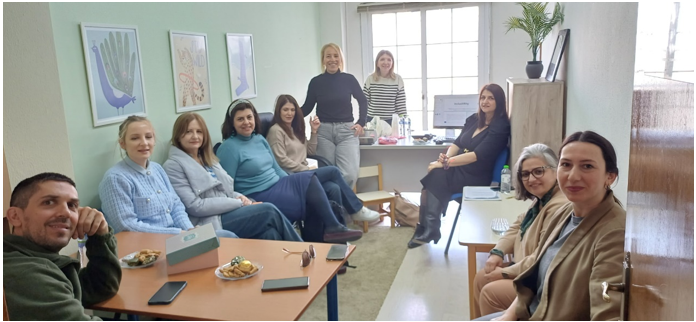
Last week, the national seminar of the InclusiVRity project—an Erasmus+ initiative aimed at empowering secondary education teachers—was successfully completed.
Our goal: to transform theoretical knowledge into practical pedagogical application, using Virtual Reality (VR) technology to support neurodiverse students.
What We Learned: The 3 “Keys” of the Seminar
1. Neurodiversity as a Strength
We discussed how neurodiversity (ASD, ADHD, Dyslexia) is not a “problem to be solved,” but a natural variation of the human brain. VR technology offers these students:
- Safety: A controlled environment to practice social scenarios
- Focus: Reduction of external distractions (especially important for students with ADHD)
- Multisensory learning: Visualization of abstract concepts, supporting students with dyslexia and dyscalculia
2. From Passive to Immersive Learning (XR)
We explored the differences between VR (Virtual Reality), AR (Augmented Reality), and MR (Mixed Reality).
Our “journey” to the Colosseum of Ancient Rome (as presented in the 2nd grade lower secondary scenario) demonstrated how full immersion enhances historical empathy and student motivation.
3. Ethics and Safety in the Classroom
Technology is a tool, not an end in itself. Particular emphasis was placed on health and safety guidelines:
- Sessions of 5–10 minutes to avoid motion sickness
- Data protection (GDPR) and informed consent
- Strategic integration based on the European DigCompEdu framework
Workshop Highlights
The energy in the breakout rooms was outstanding! Teachers were invited to design their own VR experiences through five key steps:
- Defining learning objectives
- Creating content
- Editing with a focus on accessibility
- Integrating the technology
- Reflection and evaluation
With a focus on:
- School routines
- Independent living skills
- Developing empathy (experiencing life from the perspective of people with disabilities)
The InclusiVRity Digital Toolkit
For those who want to get started immediately, we recommend:
- Hardware: Meta Quest 3/3S or Pico 4, and Insta360 cameras for creating your own content
- Software: CoSpaces Edu for drag-and-drop creation and Insta360 Studio for editing
Next Steps
You can use the EU’s free SELFIE for Teachers tool to assess your digital competences.
Are you ready to bring VR into your classroom? Download the full InclusiVRity Guide from our website.
Conclusion
InclusiVRity shows us that inclusive education is not a utopia. With the right tools and the right approach, it can become a reality.
And perhaps the most important question is not:
“Should we use VR?”
but rather:
“How will we use it?”
Thank you to all the educators for their energy and ideas!