Digital Twins and InclusiVRity
When Two Projects Speak the Same Language
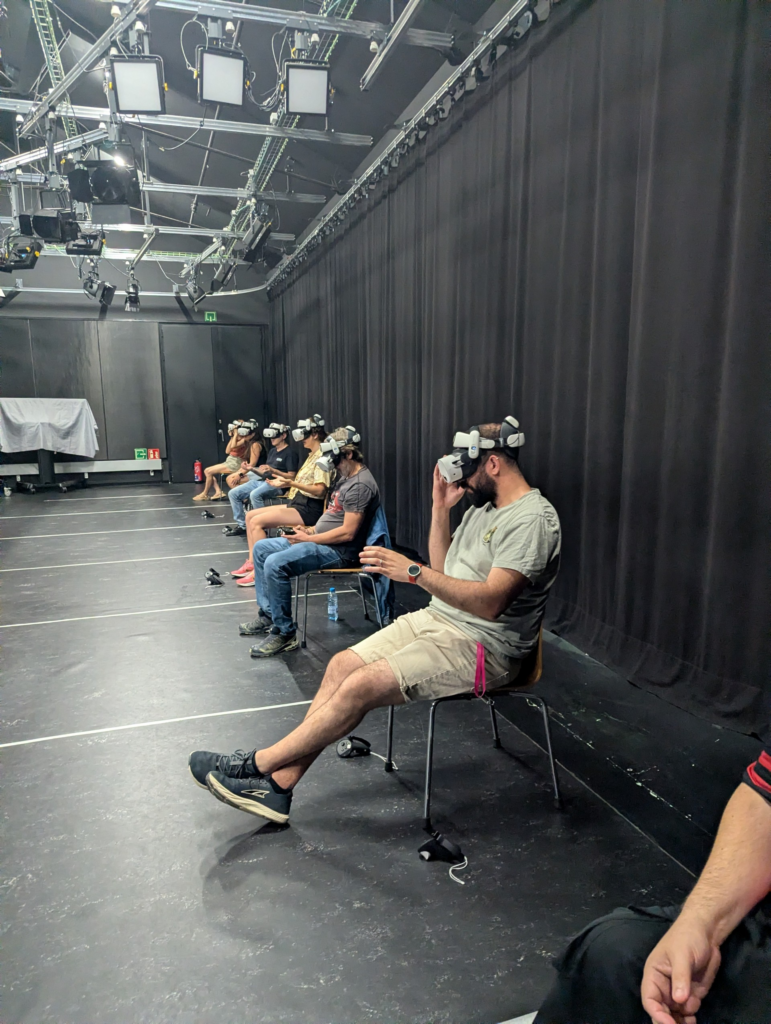
At EMAV, we are currently running two projects that, while pursuing different goals, share a common ground: immersive technology and its potential to transform education. This June, we organised an internal VR demonstration for our teaching staff.
Digital Twins is a project funded through NextGenerationEU under the call launched by the Spanish Ministry of Education, Vocational Training and Sports. Developed with IFP Valcárcel (Madrid), CIFP de Imagen y Sonido (A Coruña), EMAV and 3DZ (a company specialising in the distribution of 3D printers, scanners and software) as its technology partner. It focuses on creating realistic digital replicas of real-world objects and environments for use in animations, video games, and VR. The project is applied transversally across vocational training programmes, including EMAV’s own CFGS in 3D Animation, Games and Interactive Environments.
Working on both projects simultaneously has built at EMAV a genuine hands-on culture around VR. The technical fluency that comes from producing VR content professionally makes a real difference when the goal shifts to designing it pedagogically, for neurodiverse learners.
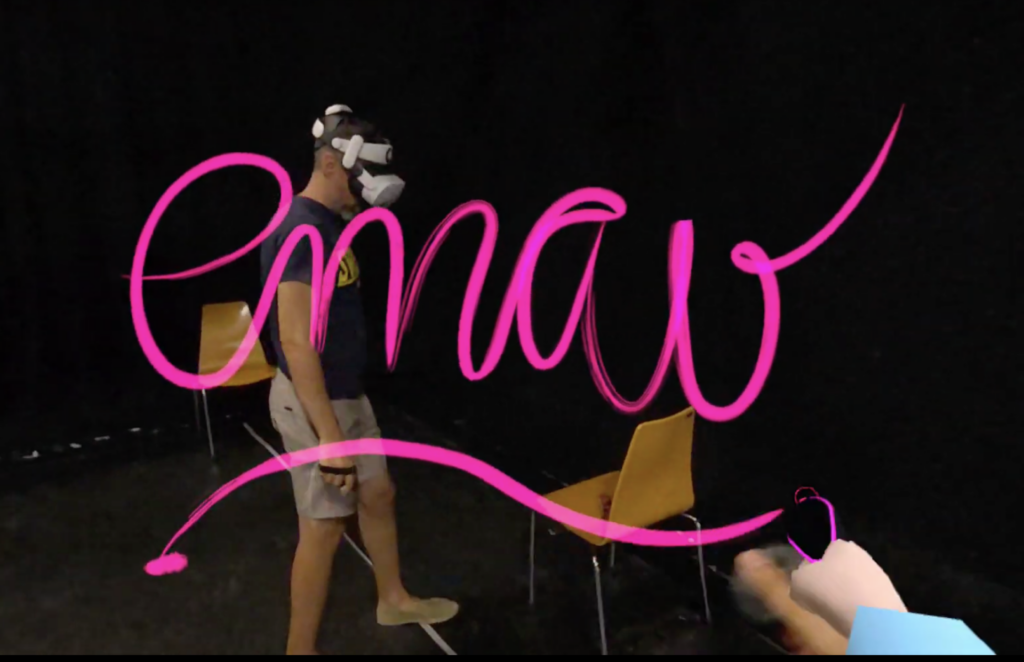
The session also brought a concrete discovery: through the demonstration we learnt about Meta Cast, a feature of Meta Quest headsets that lets a facilitator monitor, from a single computer, a live view of what every participant is seeing inside their headset in real time. This solves one of the most persistent difficulties when running VR with groups — guiding someone who is lost inside the experience when you cannot see what they are looking at. With all headsets visible on one screen, the teacher can identify who needs help and provide precise guidance immediately. For neurodiverse students, this kind of oversight is not just useful: it is essential for a safe and reassuring first encounter with VR.
This is what cross-fertilisation between projects looks like in practice. When two initiatives share infrastructure and institutional learning within the same school, the outcomes are richer than either could achieve alone — and the capacity built along the way outlasts any individual funding cycle.